Finding Balance: Privacy, Ethics, and Local AI
Because Your Coffee Dropship Dreams Deserve Privacy Too (Even If You Don't Drink Coffee)


As a privacy advocate who also loves cutting-edge technology, I’ve long struggled with a fundamental conflict: those two values rarely align these days. When voice assistants first launched - Google, Alexa, Cortana, Siri - I tried them all. But we know that story. They harvested data you never intended to share. Eventually, I stopped using them entirely.
Now AI is everywhere, and it’s complicated. It’s a double-edged sword — powerful advantages balanced against significant drawbacks. And I’m not just talking about hackers gaining more sophisticated tools or scammers becoming more persuasive. I mean the deeper ethical questions: AI threatening creative jobs, draining natural resources, impacting local communities, and the general population believing everything it says without question.
My Decision: Going Local
Enough was enough — at least for my personal life. I sought out local AI solutions. Why? Two reasons:
Privacy: No worries about my data being exposed, used to train models, or generally mishandled
Environment: I didn’t want to contribute to planetary resource drain just because I wanted to brainstorm ideas late at night—like starting a dropship service for roasted coffee beans (which I ironically don’t even drink!)
Discovering LM Studio
After trial and error, I found LM Studio. It’s free, easy to set up, and works like any chat-based AI interface. It handles text generation, which is where I spend most of my time anyway. (Yes, I found an image generation alternative too. But that’s another story.)
I’ve been experimenting with different models on both my Mac Mini and Windows Desktop. Through this process, I’ve learned more about AI than I ever did using company-approved mainstream tools at work. I discovered MCP servers and gained hands-on understanding that goes beyond theoretical knowledge.
The Productivity Temptation: Cursor
If you’ve read my other article about vibe coding, you know I’m trying Cursor for a month to understand the hype. Saying it’s “good” would be a massive understatement. The speed at which it builds code or helps diagnose issues was jaw-dropping. It’s levelled the playing field in ways I’m still processing as a Product Manager figuring out how to be more effective and productive.
But the same ethical concerns resurfaced: contaminated water, rising electricity costs, etc. I didn’t want to be part of the problem.
The Solution: Continue + LM Studio
A quick search led me to Continue, a VS Code extension that connects LLMs directly to your editor. More specifically for me: it connects LM Studio and lets me use whichever model I’ve downloaded.
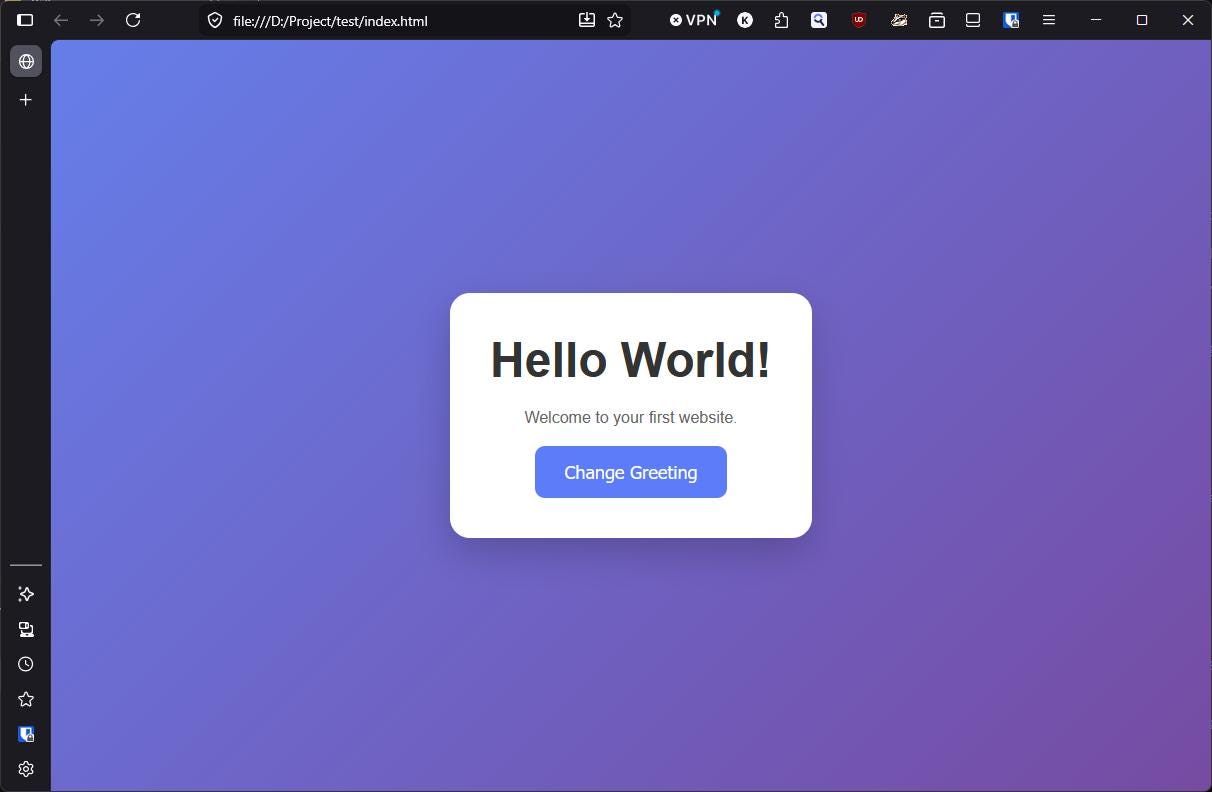
After some tinkering, I figured out how to turn on the server in LM Studio, update the config file in Continue, and it eventually worked! I asked it to create a simple “Hello world!” website — and to be honest, it took a lot longer than I had hoped. If I asked Cursor or Claude Code, it would’ve been done within seconds. Continue via VS Code + LM Studio took around 15 minutes.
Could I have coded it myself in 15 minutes? Unlikely.
There are at least two things I could’ve done differently to improve this.
Free up resources - I had two models loaded into LM Studio. After I was done building the site, I ejected one model and dropped my VRAM usage on my RTX 2060 by half.
Select a lighter model - The model I selected was
Qwen3.5-9B-Claude-4.6-Opus-Reasoning-Distilled-GGUF. Maybe it would’ve been faster if I picked a llama model, deepseek, or even Gemma.
I’m sure there are other ways I can optimize this as I learn more by doing more. But, I have to say, what it provided looked pretty good!
Accepting Limitations
The biggest challenge with running AI locally is hardware constraints. I’m limited by consumer-grade devices, but they typically get the job done. I’ve adjusted my expectations accordingly.
Here’s what matters: when I have conversations about my plans to start a homestead in the desert and build a healthy ecosystem with berms and swales, I know I’m not ironically harming resources somewhere else.
Try It Yourself
I documented how to get this setup running from scratch. If you’re curious about vibe coding without the privacy and environmental compromises: Check out the full how-to guide
All the time you save coding is eaten up with tinkering! But it is exciting stuff for sure!